The short version. Under EN ISO 1461, darker or lighter areas, a cellular pattern and some surface unevenness are explicitly not a cause for rejection. Under IS 4759, the coating must be free from “flux, ash, bare patches, black spots, pimples, lumpiness, runs, rust stains, bulky white deposits and blisters” — a stricter cosmetic list. ASTM A123 sits between them and is mainly concerned with thickness, adhesion and the size of anything uncoated.
So the same member can pass one specification and fail another on appearance alone, with identical corrosion performance. Decide which standard governs before the first consignment ships, not at the inspection. That single sentence prevents most of the arguments this page describes.
The renovation limits, as figures
What each standard permits to be touched up, and how much.
| ASTM A123 | EN ISO 1461 | IS 4759 | |
|---|---|---|---|
| Size of a single uncoated area | May exceed 25 mm in only one of its two dimensions (§6.2.1) | Each area for renovation ≤ 10 cm² (§6.3) | No area limit stated (Annex A-6) |
| Total uncoated area per piece | ≤ 0.5% of the accessible surface area and ≤ 256 cm² per tonne of piece weight (§6.2.2) | ≤ 0.5% of the total surface area (§6.3) | Not stated |
| Repair thickness | Per ASTM A780: zinc-rich paint 50% thicker than the surrounding coating, max 100 µm; zinc solder to the specified thickness, max 100 µm; thermal spray to the A123 thickness for the category | Minimum 100 µm unless the purchaser states otherwise (§6.3) | Not stated |
| Permitted methods | ASTM A780 — zinc-rich paint, zinc-based solder, thermal spray | Zinc-rich paint or paste, low-melting-point zinc stick, zinc thermal spray | Zinc spraying, zinc-rich paint (normally min. 90% metallic zinc by mass in the dry film), or a low-melting-point zinc alloy |
| Appearance as grounds for rejection | Not a basis for rejection where thickness and adhesion pass | “Darker or lighter areas … or some surface unevenness shall not be a cause for rejection” | Stricter: a named list of cosmetic imperfections the coating must be free from (§6.2) |
⚠ One limit that catches people out. ASTM A123 applies its size limits at the galvanizing plant. Once the parts have left, A123 states there is no limit on the size of an area subject to renovation — damage in transit or at site is a different question from a bare spot that left the kettle. Do not let a site argument be settled with a plant clause.
The atlas
What it looks like, why it happens, and whether it is a reject. The photographs are real rejects, set aside at our own works in Jangalpur, Howrah.
1. Bare spots and uncoated areas
- What you see. Grey or rusting steel showing through, often at a weld, a contact face or where flux did not wet the surface.
- Why. Weld slag, paint, oil, grease, lacquer or a heavy mill scale that pickling did not remove. Almost always a surface-preparation failure, not a kettle failure.
- Reject? Depends on size. Within the limits in the table above it is renovated, not rejected. Beyond them the piece is re-galvanized.
- What to do. Weld slag must come off before the piece reaches the pickle. If bare spots recur in one place on repeat items, the cause is upstream in fabrication, not in galvanizing.
2. Dull grey, matte or mottled coating
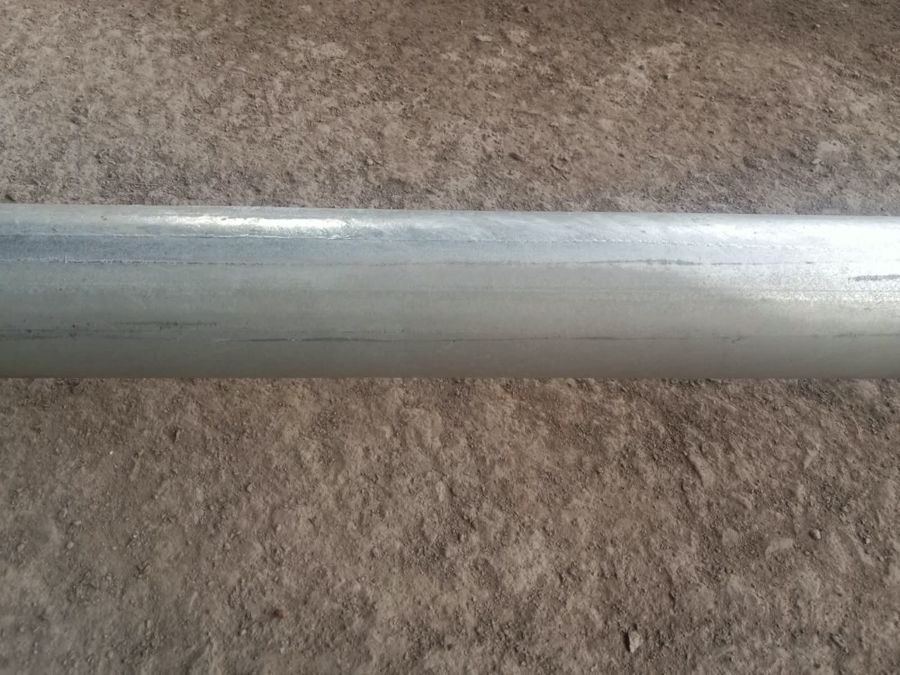
- What you see. Patches of flat grey against bright spangle, sometimes a cellular pattern, sometimes a whole member dull.
- Why. Reactive steel — silicon and phosphorus content in the Sandelin range drives the zinc-iron alloy layer right to the surface, so there is no free zinc to reflect. It is a property of the steel, not of the galvanizing.
- Reject? Under EN ISO 1461, no — the standard says so in terms. A dull grey coating is frequently thicker than a bright one and protects at least as well. Under IS 4759's cosmetic list a buyer may still argue it.
- What to do. If uniform appearance matters on your job, the control is the steel chemistry, specified at the mill, and it must be agreed before the order — not after the members are galvanized.
3. Dross inclusions (pimples)
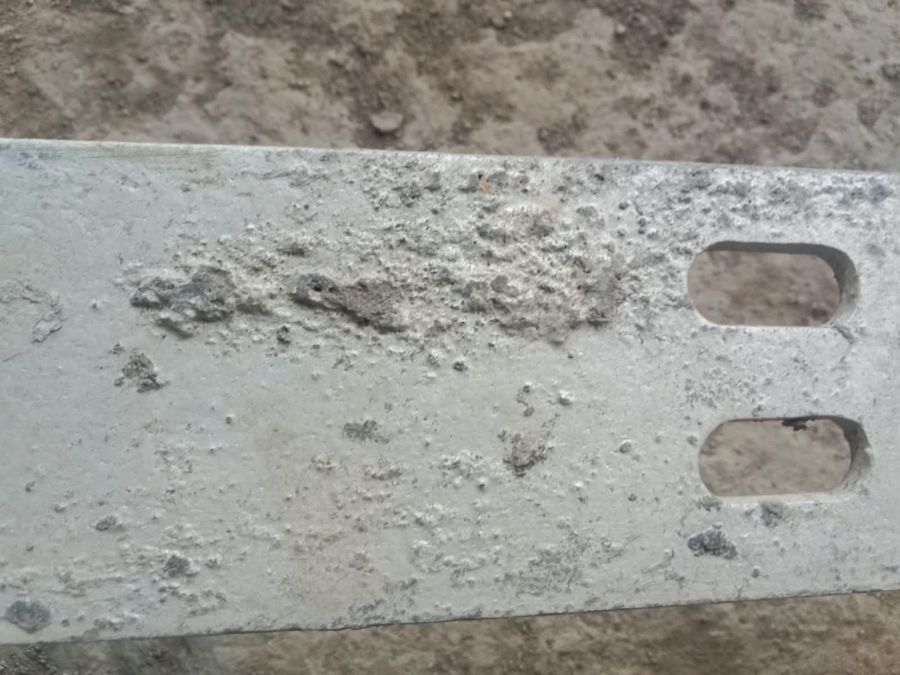
- What you see. Hard, gritty pimples raised above the surface, often in patches on a lower face.
- Why. Zinc-iron dross from the kettle bottom picked up as the piece is withdrawn.
- Reject? IS 4759 names pimples in its list. EN ISO 1461 requires significant surfaces to be free of roughness and sharp points, viewed from a metre. Small, smooth, non-protruding inclusions are normally accepted.
- What to do. Kettle housekeeping — regular dross removal. Ask a prospective galvanizer how often the kettle is drossed. It is a fair question and a revealing one.
4. Ash and flux inclusions
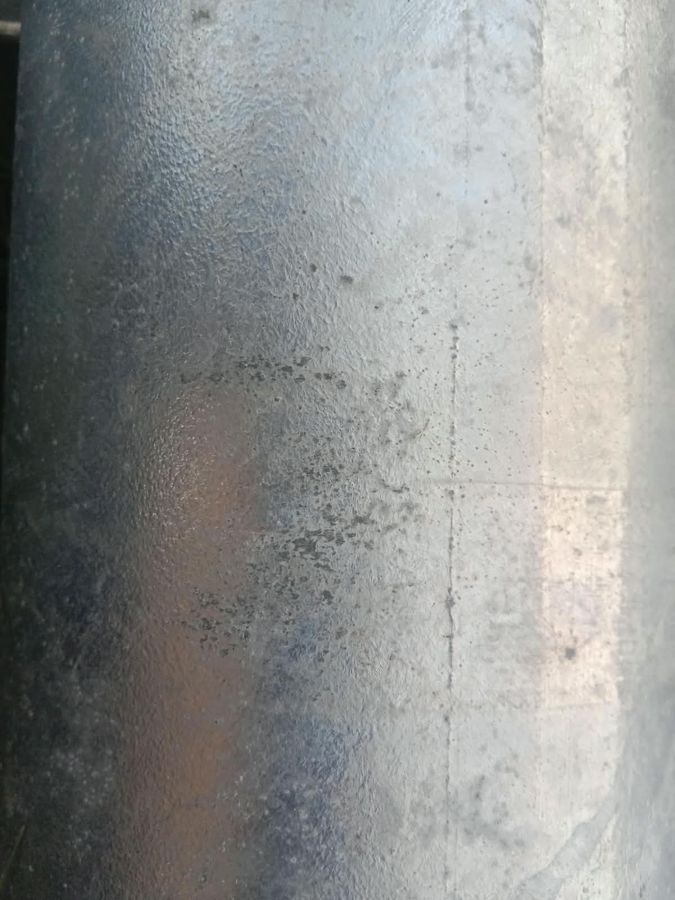
- What you see. Dark grey, powdery or crusty deposits, usually near where the piece broke the surface.
- Why. Zinc oxide ash or unburnt flux not skimmed clear before withdrawal.
- Reject? IS 4759 names both flux and ash. They usually brush off; what matters is the coating underneath.
- What to do. Check the thickness beneath the deposit before arguing about the deposit.
5. Runs, tears and icicles
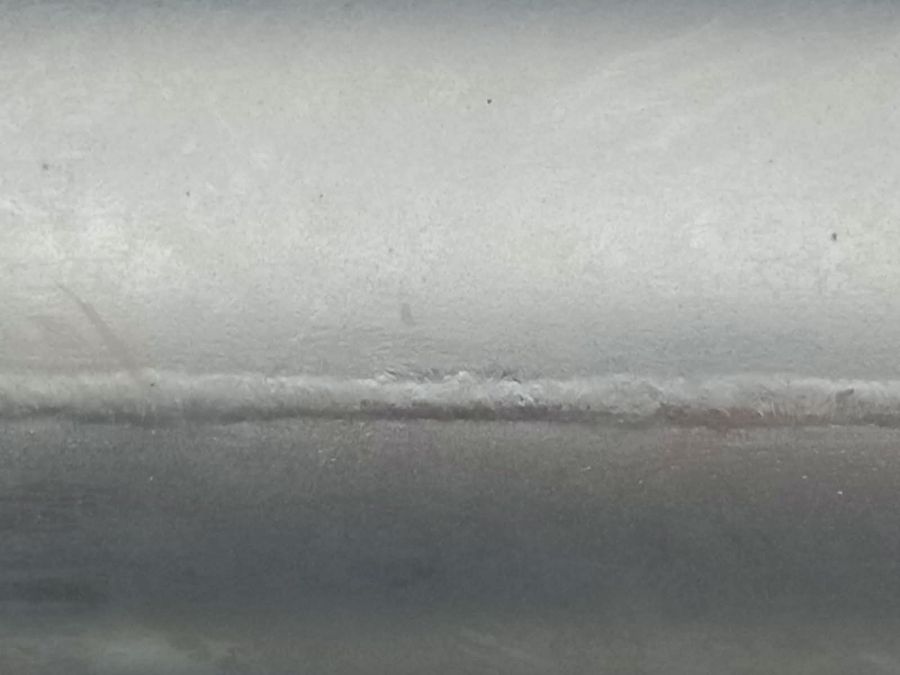
- What you see. Solidified zinc drips at lower edges, corners and around holes.
- Why. Drainage. Withdrawal angle, section geometry, and vent and drain holes that are too small or badly placed.
- Reject? Generally not, provided they do not interfere with assembly, bolting or bearing faces and are not sharp. IS 4759 names runs; EN ISO 1461 requires freedom from sharp points.
- What to do. Most of this is decided at the drawing, not at the kettle — see vent and drain hole design and ASTM A385. Zinc that has run into a bolt hole is a fit-up problem and must be dressed off.
6. The double-dip overlap line
- What you see. A visible line across a member where two immersions met, often with a slight step in the coating.
- Why. The member is longer than the kettle, so it is dipped from one end and then the other. Our kettle is 7.0 m; anything longer is double-dipped.
- Reject? No. Double-dipping is normal and accepted practice under IS 2629 and ASTM A123. The overlap line is a consequence of it, not a defect.
- What to do. If your specification prohibits a visible overlap on exposed faces, that is a genuine restriction on member length and it has to be raised at enquiry. It changes who can quote the job, including us.
7. White rust (wet storage stain)
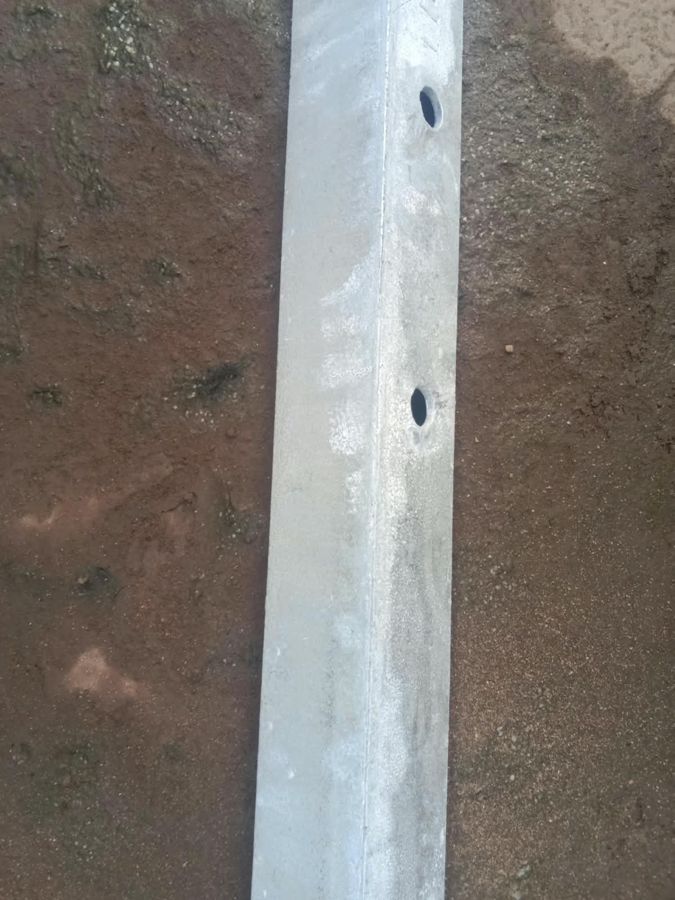
- What you see. A white or grey powdery bloom, typically on closely stacked faces after storage or a sea voyage.
- Why. Moisture trapped between zinc surfaces with no air movement. It is not caused by sea air as such.
- Reject? Usually cosmetic. It becomes a real question only where it has consumed enough zinc to take the coating below the specified thickness — which is a measurement, not an opinion.
- What to do. It is a packing and stacking problem before it is a coating problem. We have written it out at length on white rust.
8. Flaking, peeling and brittle coating
- What you see. Coating lifting in flakes, usually on a thick, dull grey coating, sometimes after handling.
- Why. An over-thick alloy layer on reactive steel, or excessive immersion time. Brittleness comes with thickness.
- Reject? Adhesion is a genuine performance requirement in all three standards, so yes — this one is rejectable.
- What to do. See why galvanized coating peels. The fix is steel chemistry and immersion control, and it is the galvanizer's to own.
9. Distortion and warping
- What you see. A member out of straight, a plate bowed, a frame out of square after galvanizing.
- Why. Locked-in fabrication stresses released at about 450 °C, unbalanced sections, thin plate welded to thick.
- Reject? A dimensional question, judged against the fabrication tolerance rather than the coating standard.
- What to do. Prevented at design and fit-up, not corrected afterwards — see distortion during hot-dip galvanizing.
10. Rust staining and black spots after storage
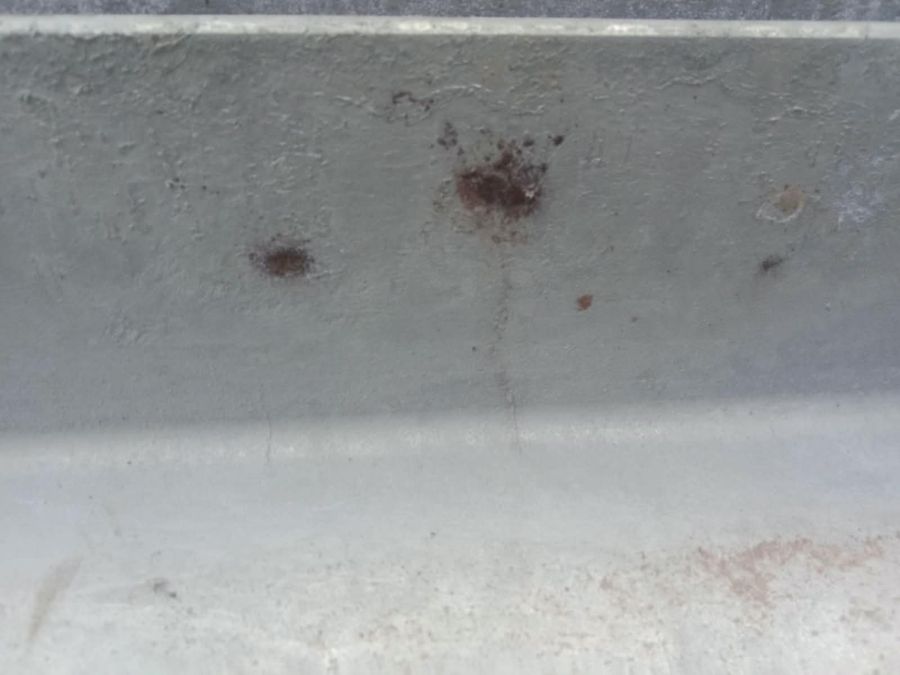
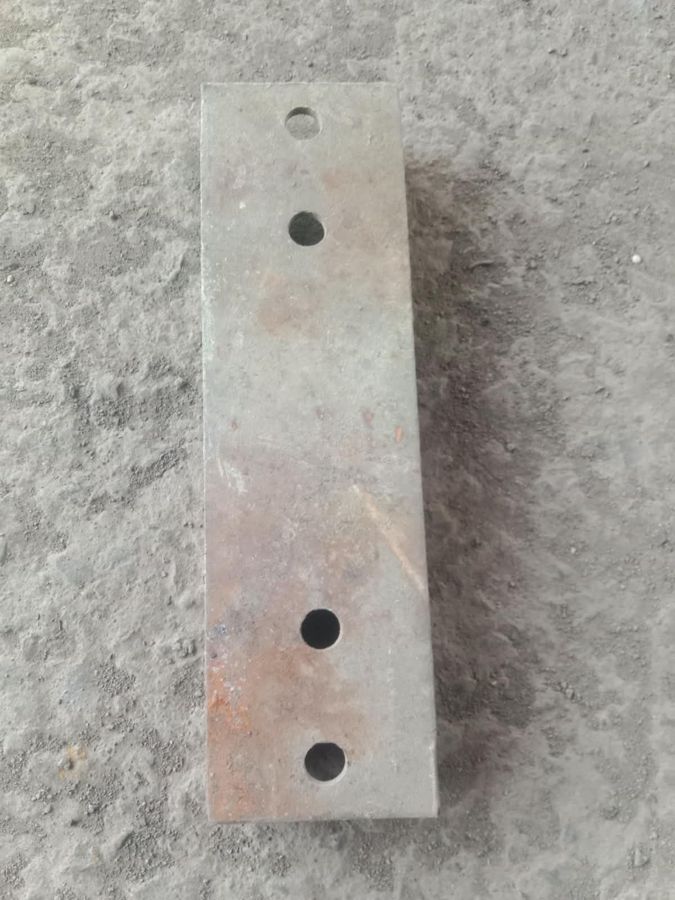
Both rejected at our Jangalpur works.
- What you see. Brown streaks or discrete black marks appearing weeks after delivery.
- Why. Iron particles embedded from handling or from a contaminated stack, or acid weeping from a lap joint or back-to-back angle that was never fully rinsed.
- Reject? IS 4759 names both rust stains and black spots. The test is whether the zinc underneath is intact.
- What to do. Bleeding from lap joints is designed in, not galvanized in. Seal-weld or vent faying surfaces — again a drawing decision.
11. Blisters
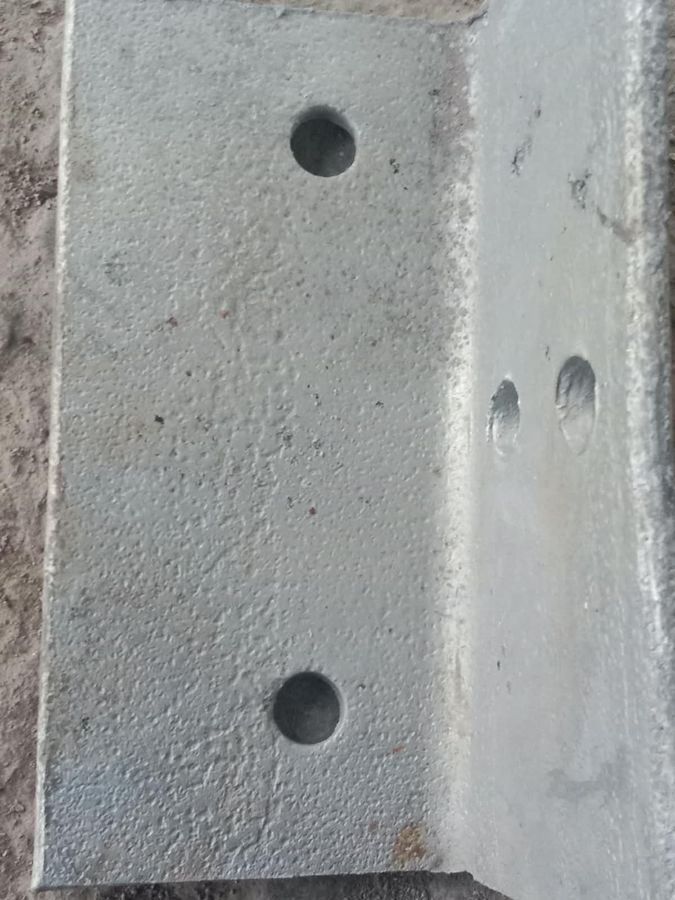
- What you see. Raised bubbles or swellings in the coating, sometimes broken open, leaving a pitted surface.
- Why. Most often gas escaping from the steel during immersion — hydrogen taken up in pickling, or gas held in laminations and surface faults in the steel itself.
- Reject? IS 4759 names blisters in its list, and ASTM A123 and EN ISO 1461 both require the coating to be free of them. Where a blister has broken, the steel beneath is effectively uncoated, so the renovation limits in the table above apply.
- What to do. Pickling time and acid strength are controlled to limit hydrogen pick-up. If blisters keep appearing on steel from one mill or one heat, the question goes back to the steel supplier.
12. Lumpiness and uneven coating
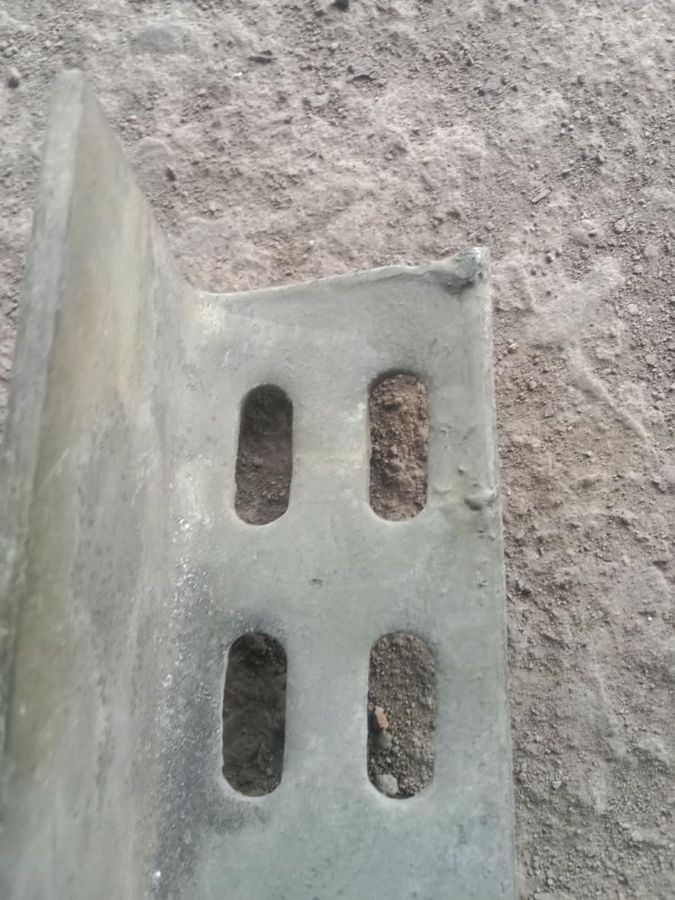
- What you see. Thick, lumpy or wavy zinc, heavier along some edges or faces than others.
- Why. Zinc that has not drained evenly — withdrawal too fast or at the wrong angle, a bath running cool, or dross carried out with the zinc.
- Reject? IS 4759 names lumpiness. ASTM A123 does not permit lumps or heavy deposits that interfere with the intended use, and EN ISO 1461 asks for significant surfaces free of nodules and sharp points. A lump on a bolting or bearing face is dressed off, and the coating left behind must still meet the specified thickness.
- What to do. Controlled withdrawal and drainage at the kettle, and vent and drain holes that let the zinc run off freely — see vent and drain hole design.
How to settle a defect argument in the right order
- Name the governing standard. IS 4759, ASTM A123 or EN ISO 1461. They give different answers on appearance and the purchase order decides which applies.
- Measure before you discuss. Coating thickness on a calibrated DFT gauge, at the number of points the standard requires, on the significant surfaces. Most appearance disputes end here.
- Check adhesion. Thickness and adhesion are the two performance requirements. Everything else on this page is secondary to them.
- Then look at size. If something is uncoated, measure the area and compare it against the renovation limits in the table above before deciding between touch-up and re-galvanizing.
- Agree the repair method and its thickness in writing. The three standards specify different repair thicknesses, and a repair that meets one may not meet another.
Where we stand
We galvanize on our own kettle at Howrah, so a defect argument is with us rather than with a sub-contractor we would have to chase on your behalf. We hold 85+ microns, read on a calibrated DFT gauge and reported per batch, and we will send the readings with the consignment rather than on request.
Two things we will say plainly. Our laboratory is real but not NABL-accredited; where a specification requires NABL type-test reports, that testing is arranged with an accredited laboratory against the order. And our kettle is 7.0 metres, so members longer than that are double-dipped with the overlap line described above. Both are better known at enquiry than at inspection.
Questions engineers ask
Answered from our own line, not from the standard's cover page.
Is a dull grey galvanized coating a defect?
Not under EN ISO 1461, which states that darker or lighter areas, a cellular pattern or some surface unevenness shall not be a cause for rejection. A dull grey coating is caused by the silicon and phosphorus content of the steel driving the zinc-iron alloy layer to the surface, and it is often thicker than a bright coating and protects at least as well. IS 4759 sets a stricter cosmetic list, so on an Indian specification a buyer may still raise it. If uniform appearance matters, control the steel chemistry at the mill before the order rather than argue about it after galvanizing.
How large an uncoated area can be touched up rather than re-galvanized?
Under ASTM A123 an uncoated area may exceed 25 mm in only one of its two dimensions, and the total uncoated area on a piece must not exceed half of one per cent of the accessible surface area, nor 256 square centimetres per tonne of piece weight. Under EN ISO 1461 each area for renovation must not exceed 10 square centimetres and the total must not exceed 0.5 per cent of the total surface area. IS 4759 permits renovation in Annex A-6 without stating an area limit. Beyond those limits the piece is re-galvanized rather than repaired.
What thickness must a galvanizing repair achieve?
EN ISO 1461 requires a minimum of 100 microns on renovated areas unless the purchaser states otherwise. ASTM A780, which ASTM A123 refers to, requires zinc-rich paint to be applied 50 per cent thicker than the surrounding coating up to a maximum of 100 microns, zinc-based solder to the specified thickness up to 100 microns, and thermal spray to the thickness A123 requires for that material category. IS 4759 names the permitted methods without stating a thickness. Agree the method and the thickness in writing, because a repair that satisfies one standard may not satisfy another.
Is the visible line from double-dipping a defect?
No. Members longer than the kettle are dipped from one end and then the other, which is normal and accepted practice under IS 2629 and ASTM A123, and the overlap line is a consequence of it. Our kettle is 7.0 metres, so anything longer carries that line. If your specification prohibits a visible overlap on exposed faces, that is a real restriction on member length and it needs to be stated at enquiry, because it changes which suppliers can quote the job.
Who pays to re-galvanize a rejected member?
That is a commercial question decided by your contract, not by the coating standard, and it is worth settling before the first consignment. What the standards decide is whether the member is rejectable at all. Where the cause is a fabrication or design matter such as inadequate vent holes, locked-in stress or weld slag, the answer usually differs from a case where the cause is kettle housekeeping or immersion control.
Does white rust mean the coating has failed?
Usually not. White rust is zinc oxide formed where moisture is trapped between closely stacked galvanized faces with no air movement, and it is normally cosmetic. It matters where it has consumed enough zinc to take the coating below the specified thickness, which is settled by measuring on a DFT gauge rather than by looking. It is prevented by spacing, ventilation and wrapping at packing.
Related standards and pages
Send us the specification
Tell us the standard, the coating requirement and the component, and we will confirm in writing what we can hold and how we will certify it. Galvanizing is on our own floor, so the answer comes from us and not from a sub-contractor.
Request a quotation Galvanizing job work